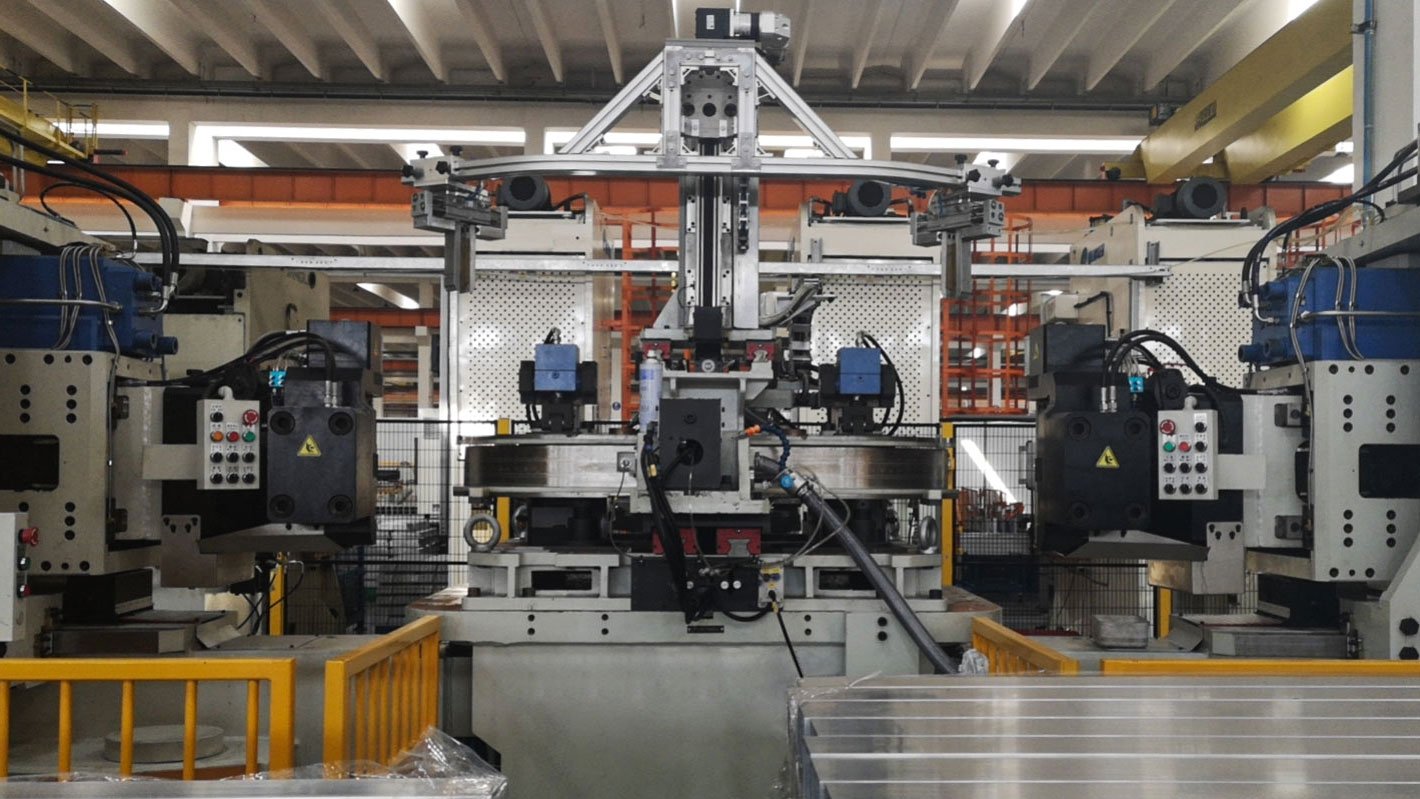
Stretch forming is a metalworking process in which a sheet or aluminum extrusion is simultaneously stretched and bent over a die to produce contoured parts. By applying controlled tensile force, the material is pulled beyond its elastic limit while conforming to the die surface, resulting in accurate shapes with minimal wrinkling and springback. This process is widely used for large, curved components in architectural, automotive, and aerospace applications.
Mechanics of Stretch Forming
During stretch forming, several mechanical behaviors occur as the material undergoes tension and bending. These behaviors depend on the forming technique, material properties, wall thickness, and die geometry. Key mechanical aspects include:
- Outer Wall Thinning: The outer radius experiences tensile stress, causing elongation and wall thinning.
- Inner Wall Wrinkling: The inner radius undergoes compression, leading to thickening or wrinkling without sufficient tension.
- Ovality: Distortion of the cross-section occurs when forces are unbalanced, especially in hollow aluminum extrusions. Applications requiring tight dimensional tolerances must control ovality.
- Wall Factor: Defined by the ratio of outer diameter to wall thickness, it indicates whether the section is thin-walled or thick-walled. A lower wall factor improves formability.
- D of the Bend: The ratio of the center-line radius (CLR) to the tube or profile diameter. A higher D value makes bending easier and helps prevent outer-wall collapse.
- Elongation: A measure of how much a material can stretch before failure. Material strength, thickness, and bend radius all influence elongation capacity.
- Springback: The tendency of the material to recover partially toward its original shape after forming. Harder materials, small radii, and certain tooling setups increase springback. In stretch forming, maintaining tension significantly reduces this effect.
Equipment and Process Terms
- Die: The rigid form that defines the final contour.
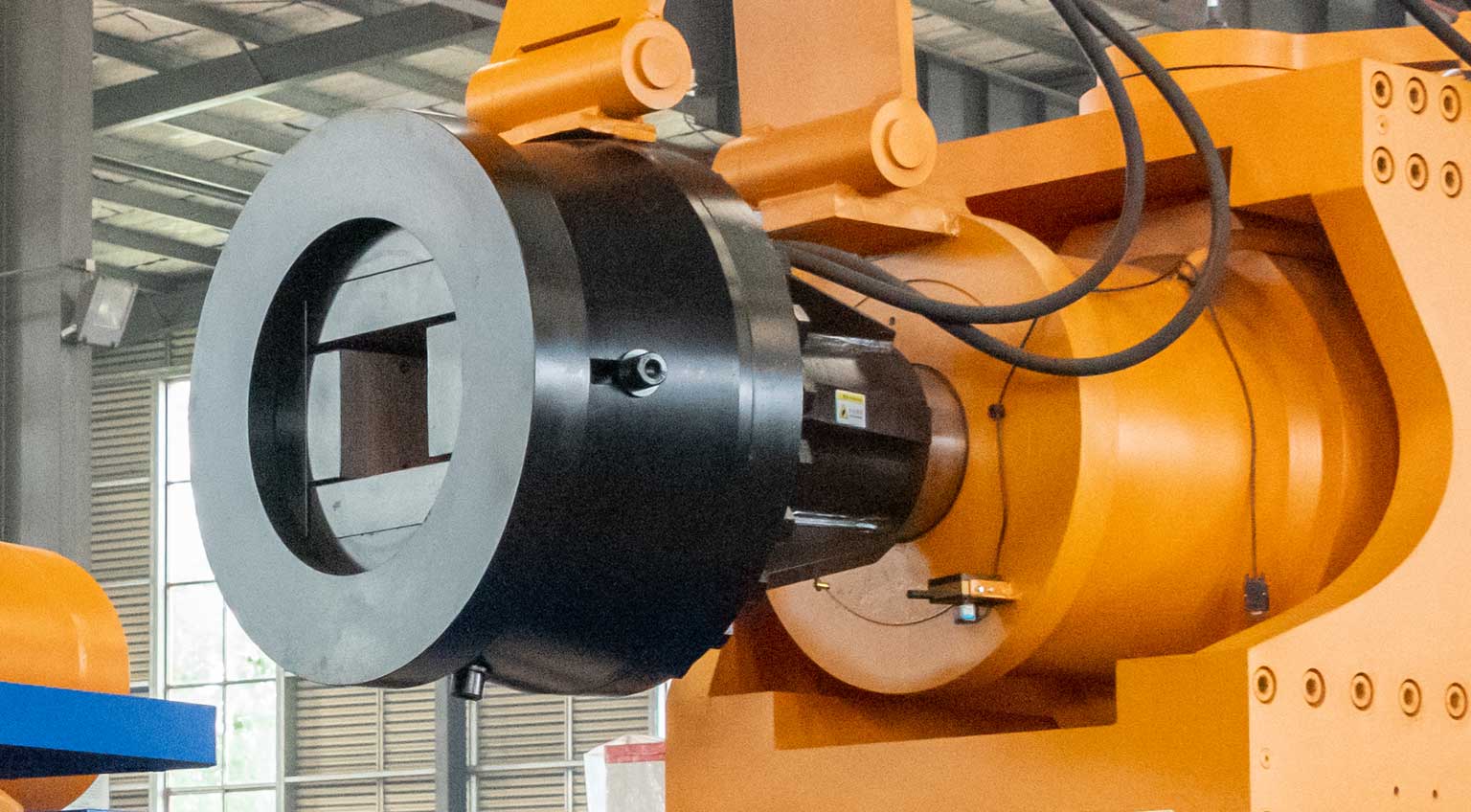
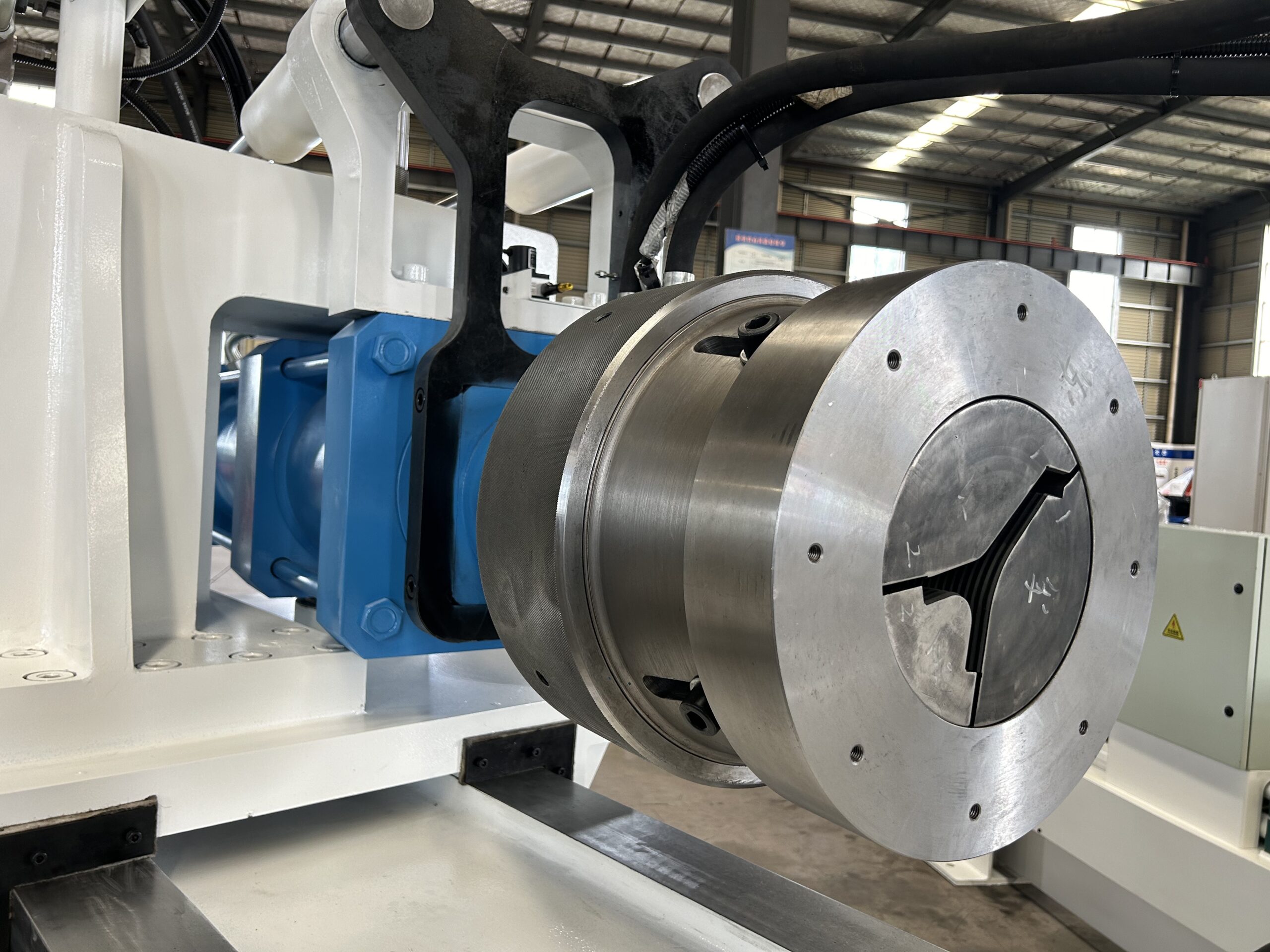
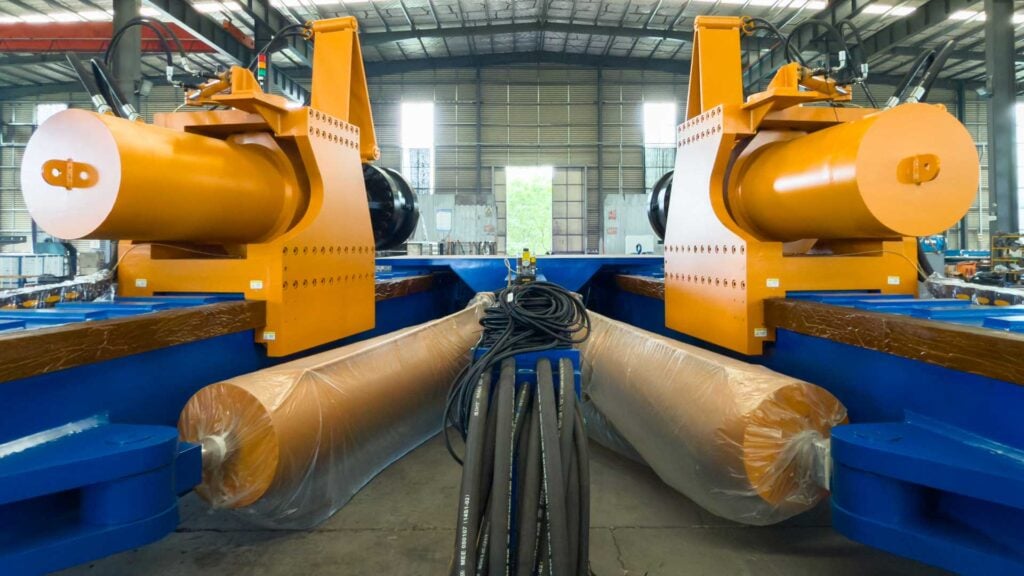
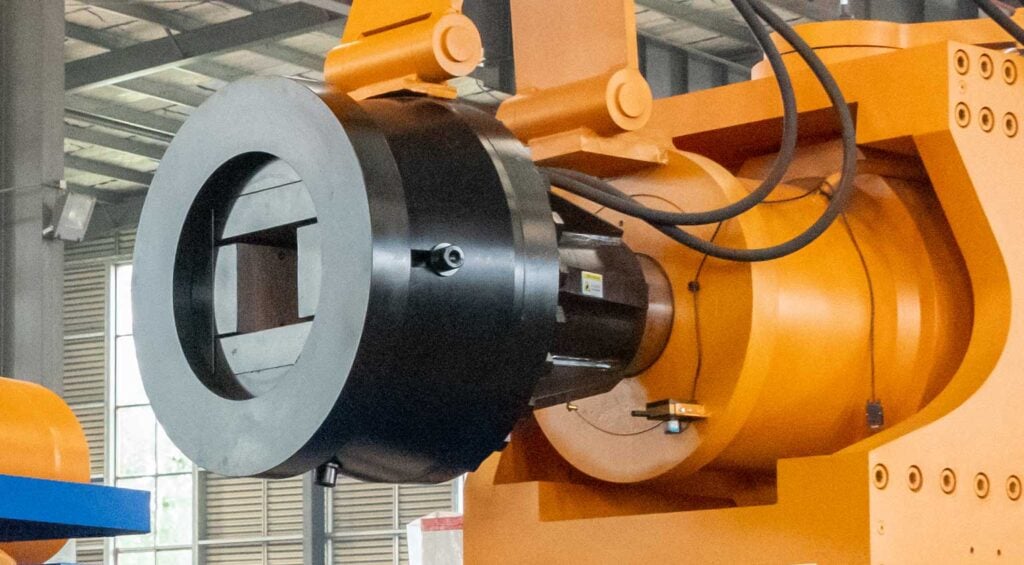
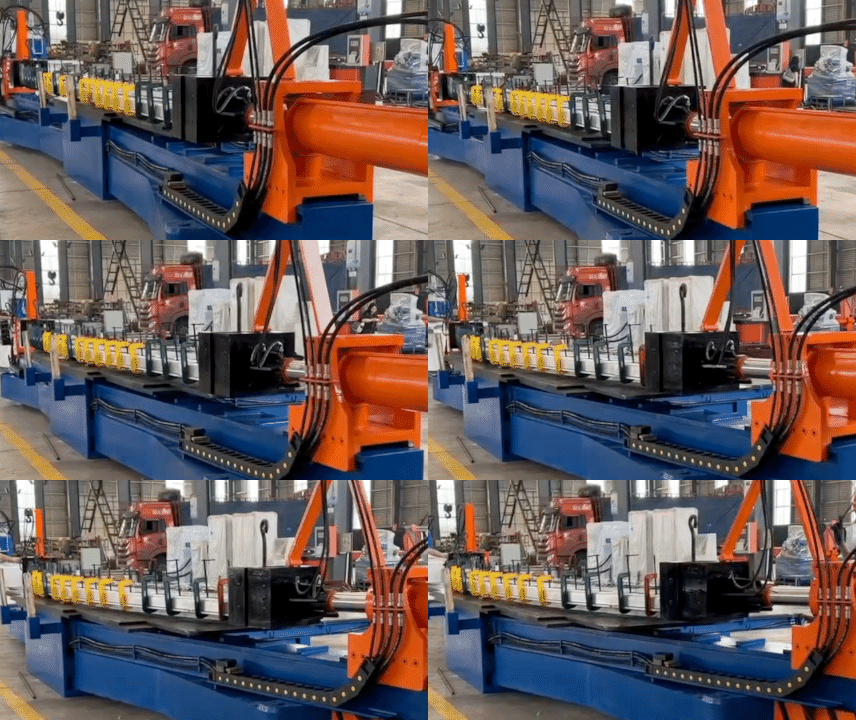
- Jaws: Mounted on carriage beams; they grip the material and move to apply controlled tension.
- Stretch: The tensile force applied until the material surpasses its elastic limit.
- Springback: Reduced significantly in stretch forming due to continuous tension.
- Wrinkling: Inner-radius ripples avoided by maintaining adequate stretching force.
- Neutral Axis: The internal layer that experiences no tension or compression during bending.
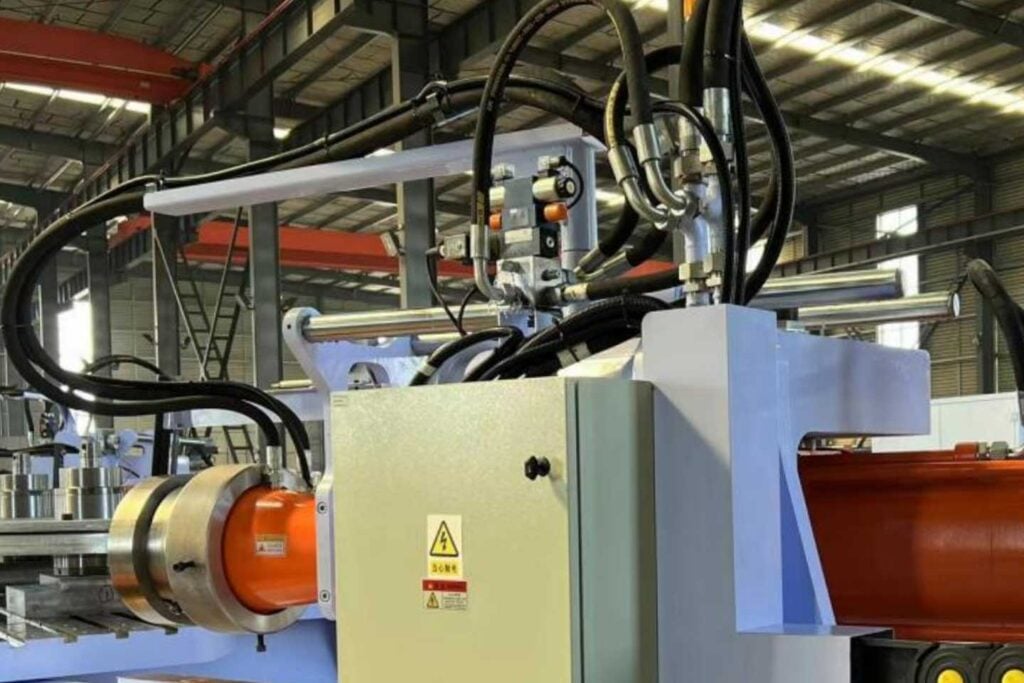
- Tonnage: Hydraulic forming force required to deform the aluminum profile.
- Rotary Draw Stretch Forming: The die rotates while the jaws move linearly, wrapping material around the die under tension.
Part and Material Terms
- Sheet Blank: Flat metal sheet used as starting material.
- Extrusion: Aluminum profile with a defined cross-section produced by pushing material through a die.
- Elastic Limit / Yield Point: Stress threshold beyond which permanent deformation begins.
- Major Stretch (ε₁): Stretch along the primary direction of elongation.
- Minor Stretch (ε₂): Stretch or compression perpendicular to the major direction.
Variations of Stretch Forming
- Simple Stretch Forming: Uses a single die for basic bending and shaping.
- Tangential Stretch Forming: Pre-strains the sheet or extrusion to reduce springback and residual stress.
- Multi-Axial Stretch Forming: Utilizes multiple controlled jaws to distribute strain uniformly across complex contours.
Want to explore our full range of stretch‑bending machines? Visit the PBF Stretch Bending Machine page for more details and equipment options.