Many companies do not know how to distinguish between a stretch forming machine and a 3-roll bending machine(such as an angle roll), and how to choose. In fact, the difference between the two is very large, and the working principles are different.
The Working Principle of Stretch Forming and Bending
Stretch forming and roll bending are two key methods for shaping aluminum profiles, each suited to different curves and precision needs. Stretch forming uses tension and a fixed die to achieve smooth, accurate bends with minimal springback, while roll bending relies on three rollers to create wide, continuous arcs. Understanding how these processes differ helps manufacturers choose the right method for structural, automotive, and architectural applications.
Stretch Forming Machine
Stretch forming is commonly used for parts with a larger bend radius, as the minimum bend radius is generally two to three times greater than other forming/bending methods.
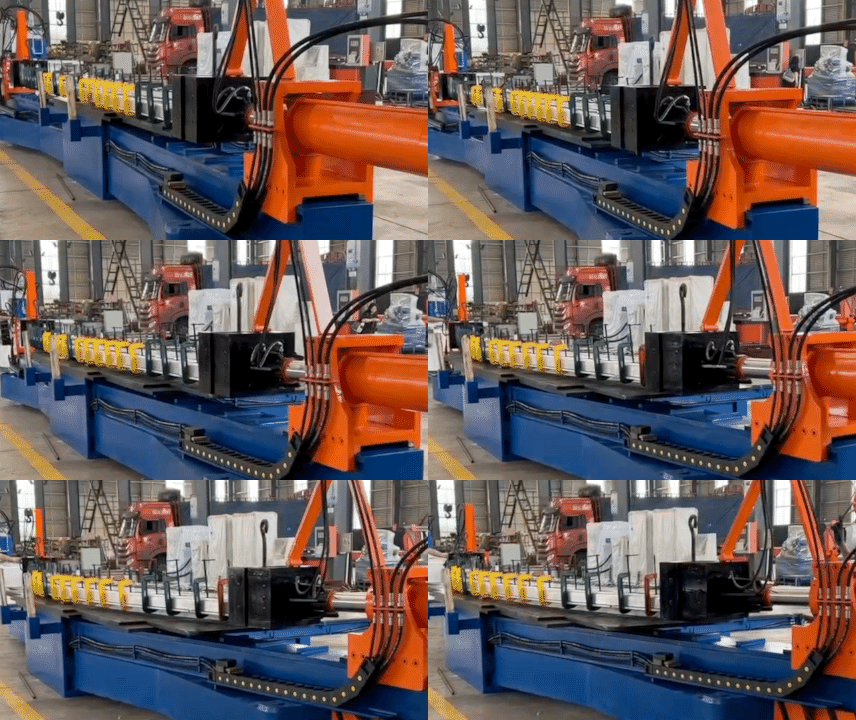
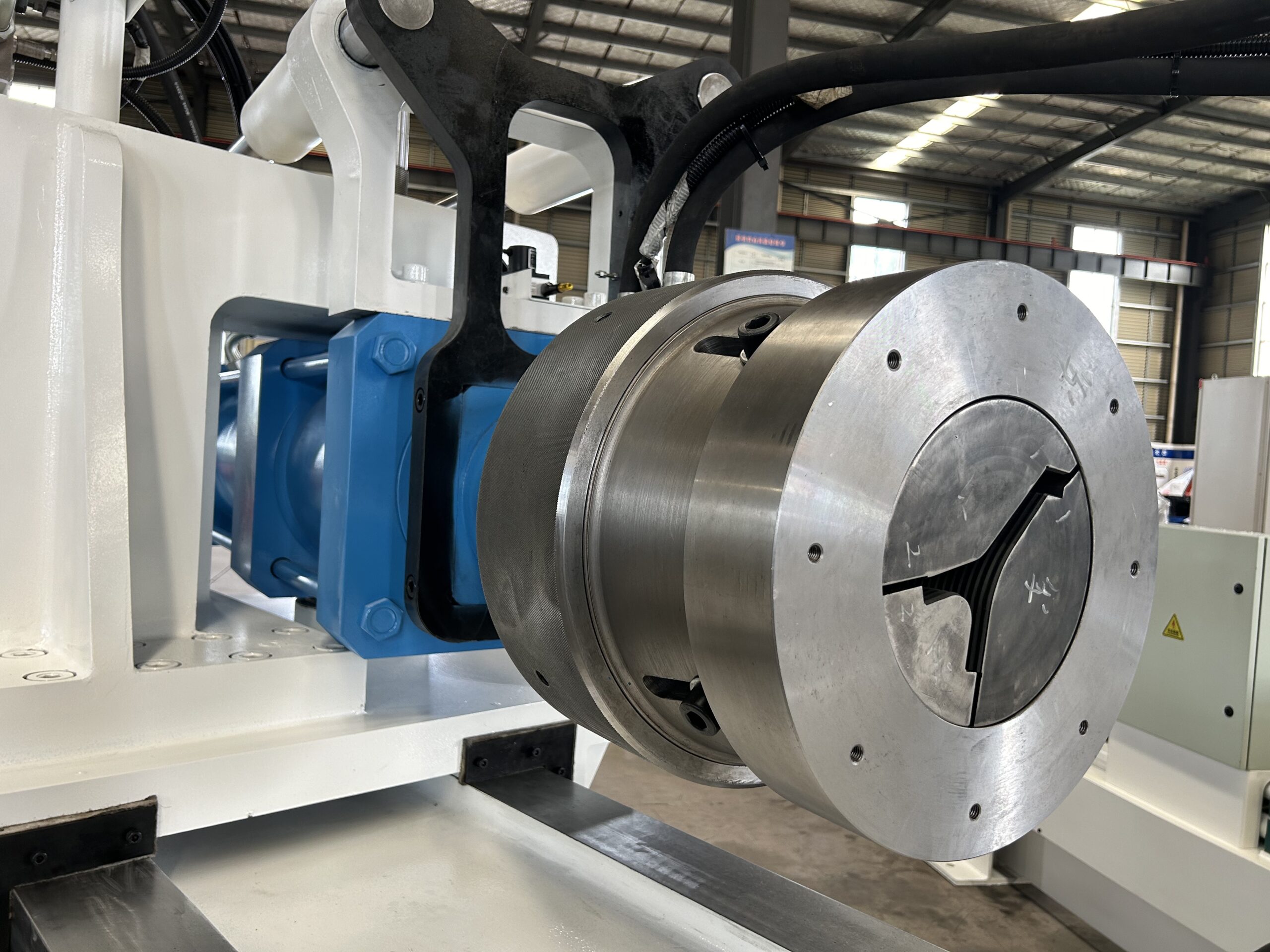
Stretch Forming involves placing an extrusion along with a rounded, fixed bending die which is secured with clamps on each end. The machine will then rotate the clamped ends together, bending the extrusion to angles up to 180°. The extrusion takes its shape when it is bent around the bending die to reach its desired angle. Stretch forming is commonly used with components that require a larger bend radius.


For bending parts that require high precision, large length and radius of curvature, and small transverse dimensions, they can be stretched and bent on a special stretch-bending machine. During bending, the entire thickness of the plate is subjected to tensile stress, so only elongation deformation occurs, and the deformation caused by a rebound after unloading is small, which is easy to ensure accuracy.
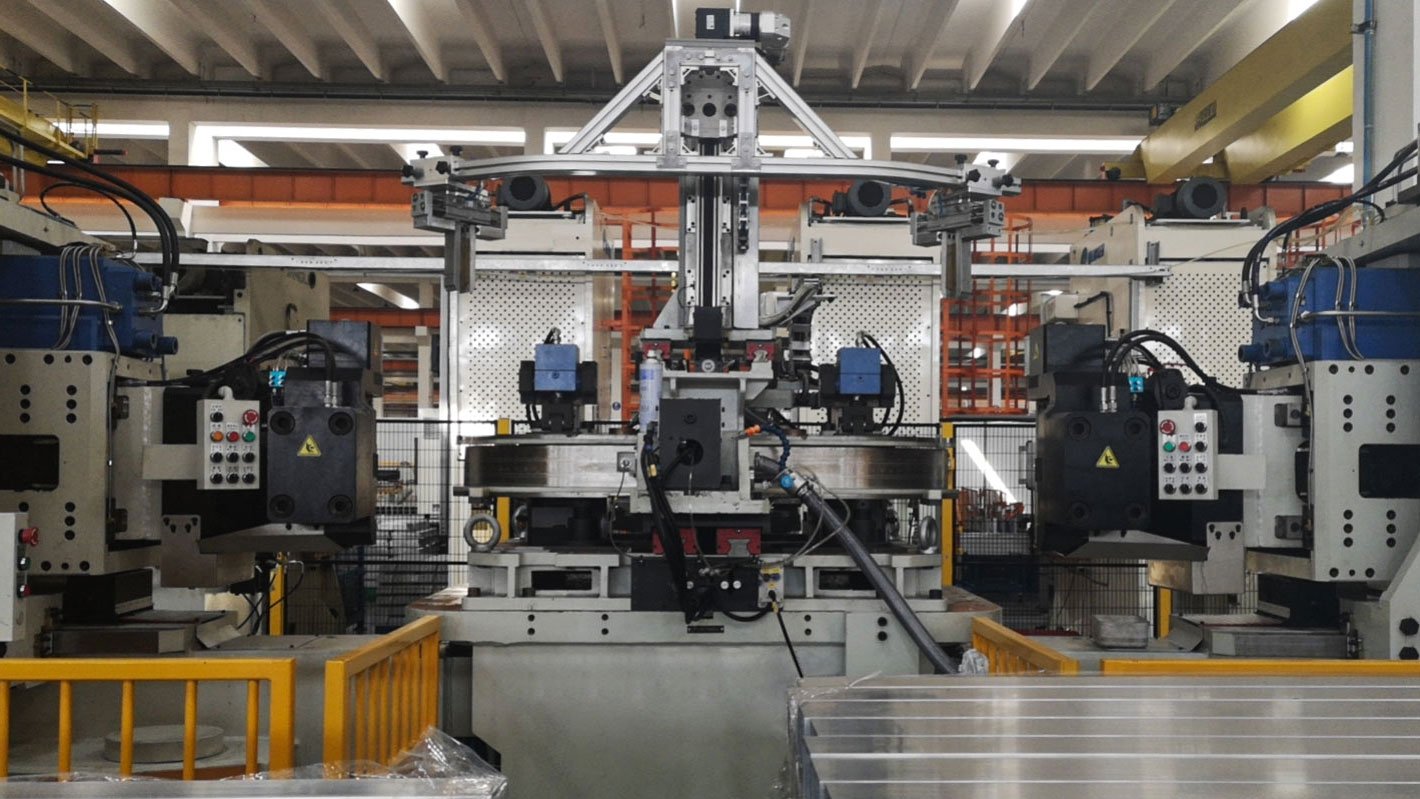
Stretch forming machine(aka, Stretch Bending Machine, Profile Stretch Press) forming is widely used in the manufacture of high-pressure vessels, boiler drums, boiler tubes, hull steel plates and ribs, various utensils, instrumentation components, and cabinet inserts.) forming is widely used in the manufacture of high-pressure vessels, boiler drums, boiler tubes, hull steel plates and ribs, various utensils, instrumentation components, and cabinet inserts.
Roll Bending Process
The three-axis rolling arc is used, and the principle of cold bending is used.
The relative position change of the workpiece (through the up and down movement of the upper roller shaft or the lower and upper roller shaft of the profile bending machine) and the pressure generated during the rotation movement in the direction perpendicular to the deformation of the profile itself cause the profile to produce continuous plastic deformation (make the outer layer of the profile Deformation) The fiber stretches, the inner fiber shrinks to produce bending deformation, the middle fiber does not change), and the workpiece with a predetermined shape is obtained at room temperature (we call it cold bending). Three-Roll Bending directs an alloy extrusion along with three different metal rolls or points that are typically triangular in shape. The rolls are adjustable to form accurate angles that can roll either vertically or horizontally. The extrusion is usually fed into the motorized rollers, which then bend and curve the extrusion accordingly. Extrusions are limited to a single bend per cycle. A higher angle of the bend would require more time to accomplish the desired angle.
Symmetrical bending: Refers to the three rollers in a symmetrical shape (pyramid shape) during bending. The upper roller or the two lower rollers rotate in a symmetrical relative position at the center to apply pressure to the profile to produce plastic deformation
Disadvantages: It is not possible to pre-bend the profile. There are larger straight edges at the end of the workpiece after bending, which causes waste.
Asymmetrical bending: Refers to the asymmetrical shape of the three rollers of the section bending machine during bending. The upper roller and the two lower rollers move vertically at asymmetrical central positions, and the upper roller or the two lower rollers rotate to exert pressure on the profile. Produce plastic deformation. The end of the profile can be pre-bent.
Major 6 Differences: Stretch Forming vs Roll Bending
When it comes to bending aluminum profiles, stretch forming and roll bending each offer unique advantages. This section explores how the two methods differ in handling metal surfaces, complex cross-sections, residual stress, bending length, radius, and 3D shapes. Understanding these distinctions helps engineers and manufacturers select the most suitable process for high-precision, high-quality applications.
- Metal surface: After spraying, electrophoresis, electroplating, polishing, wire drawing, etc., the material can be directly bent by the stretch forming machine without damaging the surface of the material, and the roller of the roll bending machine will cause damage to the metal surface.
- Profiles with cavities and complex cross-sections: can be formed in one pass. When the relative bending radius allows, the inner wall will not be wrinkled and the section will not be distorted. It is well known that roll bending machines and pipe bending machines need to insert a mandrel into the profile to ensure no deformation when bending this type of material.
- Stretch forming can effectively eliminate the residual stress inside the material, and the product has good dimensional stability. Due to the cold work hardening of the metal material, the comprehensive mechanical properties of the material can be improved after the material is stretched and bent.
- The bending ability is stronger than the roll bending: the length of one forming can reach more than ten meters, which can improve the installation efficiency, reduce the installation cost, save materials and improve the quality of the project for projects that require a long arc length.
- Bending radius: The stretch bender is not limited when the mechanical properties (elongation) of the material allow, but it cannot be greater than 180 degrees, and the roll bender can bend 360 degrees.
- Both stretch forming machines and roll bending machines are capable of 3D bending, and advanced CNC systems allow not only multi-plane curvature but also controlled twisting when required. The difference lies not in whether they can bend in 3D, but in how they achieve these shapes.
Stretch forming uses end-clamping and axial tension to wrap the profile over a die, making it ideal for smooth, high-accuracy 3D contours. Roll bending, with CNC-controlled roller movement and rotation, allows flexible, continuous 3D curvatures—often over long lengths and variable radii.
How to Choose the Right Aluminum Bending Process
Choosing the right bending method—stretch forming or roll bending—depends on the profile geometry, required accuracy, surface finish, and production volume. Stretch forming excels when smooth, wrinkle-free curves and minimal springback are essential, especially for large radii or long aluminum extrusions. Its uniform tension ensures consistent dimensional accuracy and high-quality surfaces, making it ideal for aerospace skins, automotive roof rails, bumpers, and architectural cladding.
Roll bending is better suited for creating long, sweeping curves with large radii efficiently. It handles a wide variety of profile shapes and sizes, making it practical for building façades, frames, handrails, and structural components.
When selecting a process, consider the bend radius, surface finish, tolerance requirements, and production scale. Stretch forming is preferred for precision and surface quality, while roll bending offers efficiency and flexibility for large-radius applications. Matching process capabilities to part requirements ensures the best balance of quality, cost, and production speed.
Interested in seeing real machines in action? Click here to explore our full range of stretch bending machines — ideal for high‑precision aluminum profile forming and 3D bends: https://www.angleroller.com/stretch-bending-machine.html